
Six to ten weeks, six steps.
A one-of-a-kind piece typically costs 10% to 20% more than a comparable showcase model — sometimes less, because you're not paying a wholesaler's margin or a design that doesn't suit you.
One hour, by appointment. We talk about the person, the style they already wear, daily use — and the budget, frankly, from the start. It drives the choices, not the other way around.
Two or three hand drawings within the following week, with real proportions and the price of each. We adjust until it's right.
A 3D render to see the piece from every angle, then a resin-printed model you can try on your finger. Nothing is cast before your written approval.
Cast in gold or platinum at the workshop, from the model. This is where the piece stops being an idea: two days later, it exists in raw metal.
The prongs are cut and bent down one by one under a binocular loupe. The slowest, most delicate step — and the one that decides if the stone holds for thirty years.
Polishing, rhodium plating if it's white gold, ultrasonic cleaning, interior engraving. Delivered in person, with the stone's certificate and the appraisal for your insurance.
Four letters, and no one ever explains them to you.
We explain them here, and again in-store, with a loupe and two stones side by side. You'll see the difference with your own eyes before you pay for it.
One carat = 0.2 grams. It's not a visual size measurement: a well-cut 0.90-carat stone often looks bigger than a heavy, deep 1.05-carat one. Prices jump right above round numbers (1.00 ct, 1.50 ct) — buying 0.95 ct saves hundreds of dollars for an invisible difference.
D is perfectly colorless, Z is distinctly yellow. From K onward, the tint becomes visible to the naked eye on a white setting. The sweet spot is around G-H: no one will see the difference from a D, and you pay 30% less. On yellow or rose gold, a J passes very well.
These are inclusions, tiny natural marks inside the crystal. From VS2 and often SI1, they're invisible without a 10x loupe. Paying for VVS1 on a ring worn every day means paying for something no one will ever see.
The only one of the four you shouldn't skimp on. It's the cut — the angles and facet proportions — that determines whether a stone reflects light or stays dull. An Excellent cut on a modest diamond beats a Good cut on an expensive stone. Always.
Natural or lab-grown
Chemically, they're the same carbon crystals: same hardness, same brilliance, same 4 C's. The difference is origin — and price. At equal quality, a lab-grown diamond today costs 60% to 80% less than a natural one.
Concretely: a 1-carat solitaire, color G, clarity VS1, runs around $9,500 natural and $2,400 lab-grown. Natural holds its resale value better; lab-grown gets you a bigger stone for the same budget. Both are legitimate choices, and we sell both.
Certificate and colored stones
Every diamond of 0.30 carat and up is sold with its GIA or AGS certificate — an independent report describing the stone in detail, with its number laser-inscribed on the girdle. Without a certificate, you're buying an opinion.
Sapphire, ruby, emerald, tourmaline, morganite, opal: beautiful, often cheaper than a diamond, but softer. Emerald and opal need protective settings and a bit of care. We'll tell you which one survives a lifetime of dishwashing.
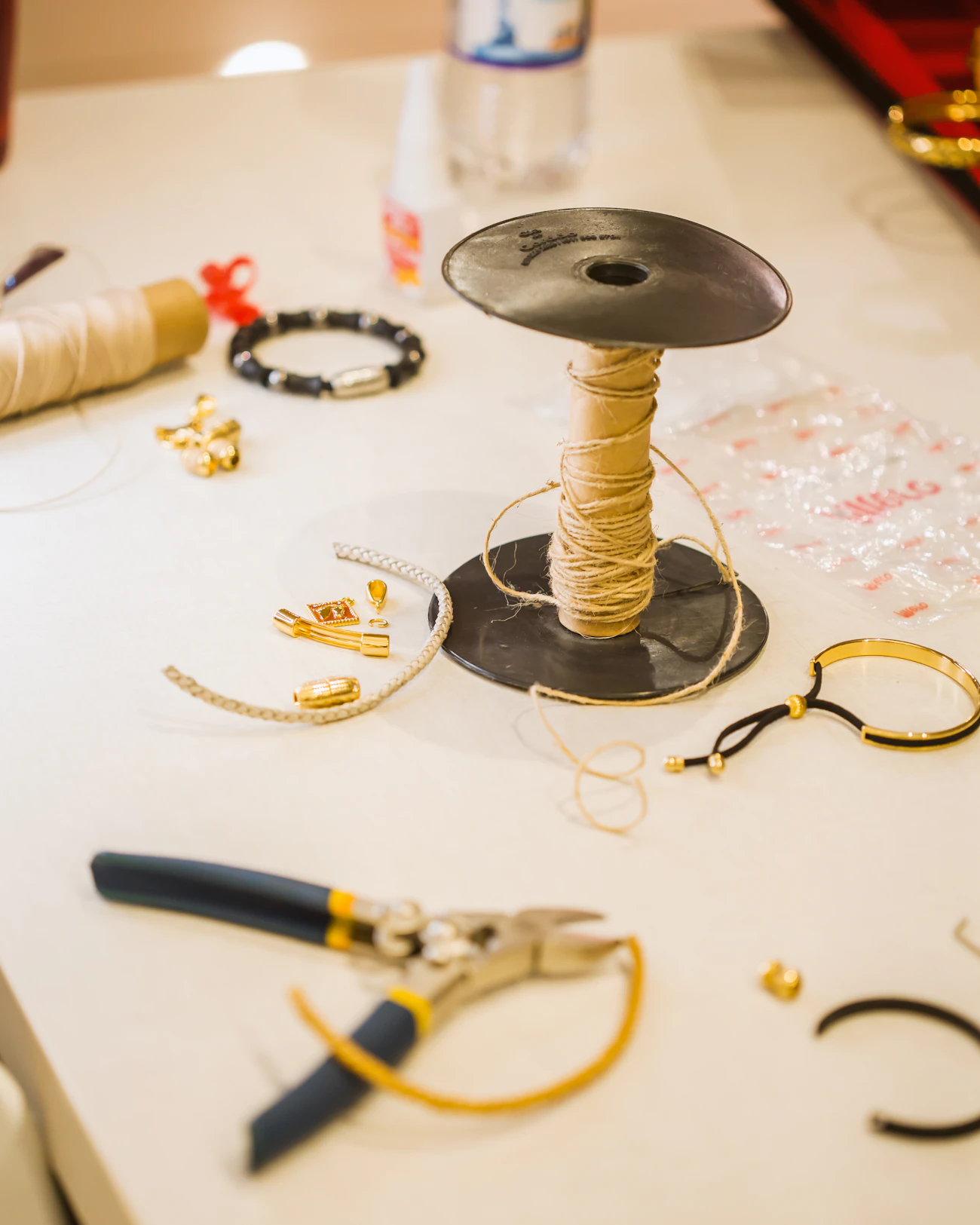
It all happens here, in the workshop out back.
Your family jewelry doesn't leave in a box for a subcontractor in Montreal. It goes through a door, and it comes back. Free estimate, always given before any work begins.
Why two identical-looking rings can cost triple.
A ring's price comes down to four things: the stone (by far the largest share, and where half a clarity grade changes thousands of dollars), the metal and its actual weight, the work of manufacturing and setting, and the margin of whoever sells it to you.
Two "1-carat" solitaires can differ by $8,000: color D versus J, excellent cut versus good, clarity VVS1 versus SI2, natural versus lab-grown. That's why we put the certificates on the table and show you the stones under a loupe. No pressure sales, ever: if you leave to think it over for a month, your quote stays valid.